
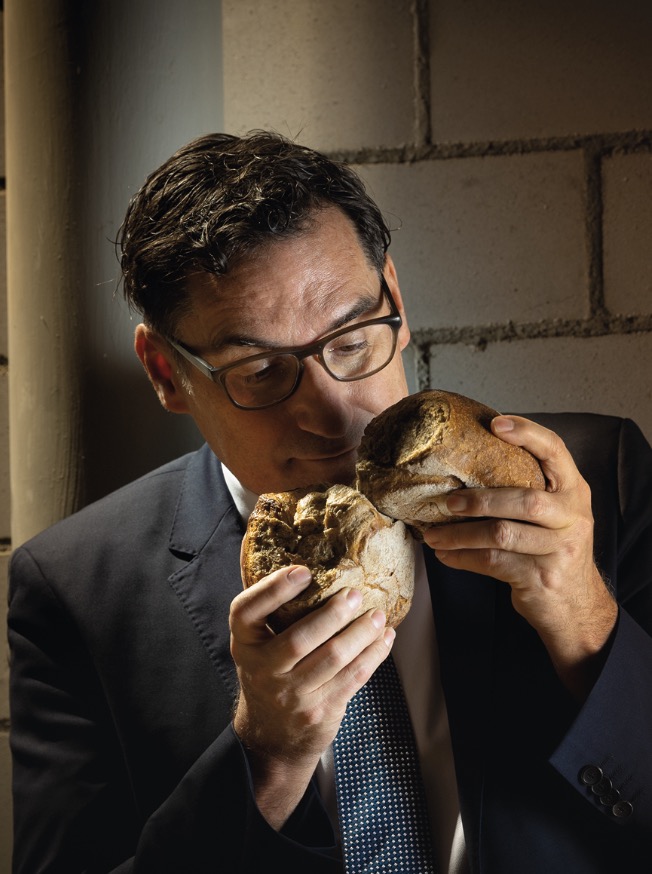
Rye bread by Prof. Michael Kleinert
The assessment of bread quality should always be conducted within a regional context and with consideration of consumer expectations. One of the most critical factors for me is the degree of browning, which can range from light to golden brown to dark with a hint of bitterness.
Each variation can be rated as «good to excellent» depending on individual preferences. Furthermore, the shape of the bread slices plays a significant role, as it often determines the bread’s intended use and, ultimately, its success.
A prime example is toast as well as rye bread baked in tins, whose popularity is closely tied to their characteristic square slice shape.
My personal connection to rye bread runs deep. A golden-brown, oval rye-mixed bread loaf weighing 1.5 kilograms was a staple of my childhood in Northern Germany. In my parents’ bakery, this bread was a bestseller and has shaped my perception of quality and craftsmanship to this day. Since my apprenticeship in the family bakery, it has remained, for me, the epitome of a well-made bread.
Rye bread has its roots predominantly in Central and Northern Europe, where it has traditionally played a vital role in the diet. Until the 1980s, the use of sourdough was essential to ensure the baking capability of rye flour. This often resulted in a pronounced sour intensity, which remains a defining characteristic of an «authentic» rye bread to this day. However, visually and in flavour, both mild and intense sour profiles can meet consumer expectations, depending on their preferences.
The concept of what constitutes good bread is continuously evolving, shaped by changing values and demands. While appearance initially captures consumers’ attention, it is taste and enjoyment that ultimately drive repeat purchases. At the same time, aspects such as sustainability and regenerative production are becoming increasingly important for younger generations. There is a growing expectation that grain, flour, and the finished bread are produced within a holistically sustainable framework.
Therefore, the bread of the future must not only excel in flavour but also be reasonably priced, sustainable, and future-proof.